
Digital Marketing: The Magic Wand for Modern Business Growth
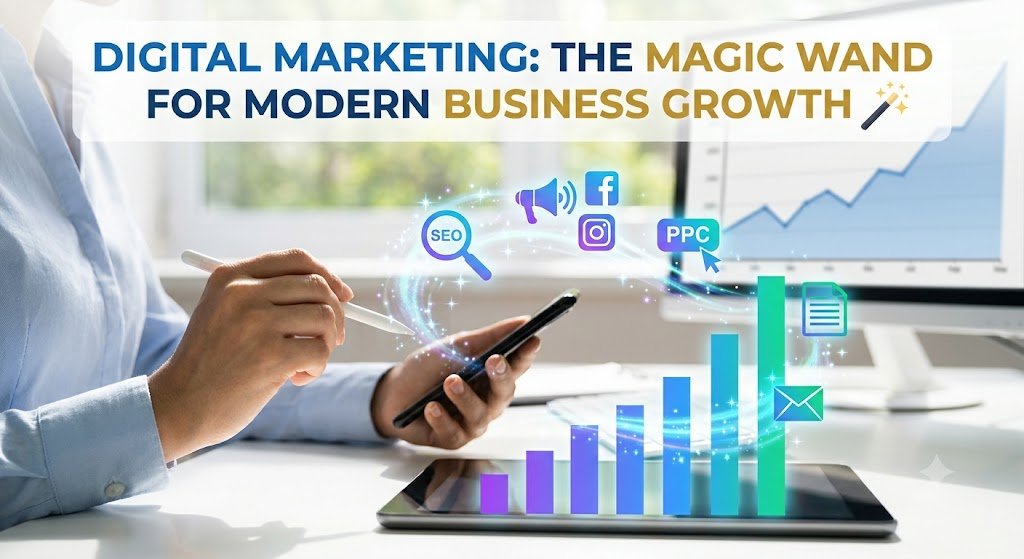
How many of us go through a single day without using a smartphone? From the moment we wake up until we go to sleep at night, the internet and social media are active parts of our lives. Gone are the days when we had to visit physical stores to purchase products; today, with just a click at our fingertips, goods from anywhere in the world arrive right at our doorstep. The driving force behind this massive transformation is Digital Marketing.
Whether launching a new business or scaling an existing enterprise, modern businesses increasingly prefer digital marketing over traditional advertising methods. But what exactly is digital marketing? What are its primary components, and how can it benefit a business? Let’s explore these questions in detail through this blog.
What is Digital Marketing?
Simply put, digital marketing is the practice of promoting products or services using the internet and digital devices (such as computers, smartphones, and tablets). Unlike traditional marketing, digital marketing reaches consumers right where they spend their time—on search engines, social media platforms, websites, and email—allowing brands to engage them directly and effectively.
Key Components of Digital Marketing
Digital marketing is not a single strategy; rather, it is a collection of various digital channels working together. The most prominent among them include:
1. Search Engine Optimization (SEO)
When we search for something on Google, the websites that appear first do not get there by accident. They rank high on search engine results pages through targeted SEO strategies. Having a well-optimized website helps drive free, organic traffic directly to your business.
2. Social Media Marketing (SMM)
Today, almost everyone uses social media platforms like Facebook, Instagram, LinkedIn, and X (formerly Twitter). Businesses leverage these platforms to showcase products through images, videos, and reels, enabling them to connect with millions of potential customers at a very low cost.
3. Pay-Per-Click Advertising (PPC & Google Ads)
PPC ads are the sponsored advertisements we see on search engines or social media feeds. Advertisers only pay when a user clicks on the ad and visits their website. This method is ideal for generating quick sales and quality leads for a business.
4. Content Marketing
As the famous adage goes, “Content is King.” Content marketing involves creating and sharing valuable, relevant resources—such as blogs, articles, videos, and infographics—to build trust and attract target audiences organically.
5. Email Marketing
Email marketing involves collecting customer email addresses and sending them regular updates, special offers, discount codes, and company news. This approach is highly effective for nurturing customer relationships and driving long-term retention.
Traditional Marketing vs. Digital Marketing
In the past, newspapers, magazines, television commercials, and large billboards were the primary avenues for marketing. However, traditional marketing comes with notable drawbacks:
High Costs: Running ads on television or in print requires a substantial budget, making it difficult for small entrepreneurs to afford.
Lack of Precise Targeting: Traditional advertisements reach a broad audience, many of whom may not be interested in the product.
Difficulty Measuring Results: It is hard to accurately track how many people purchased a product solely because they saw a billboard or a newspaper ad.
In contrast, digital marketing allows businesses to target specific demographics based on age, location, and interests at a fraction of the cost. Moreover, digital campaigns provide real-time performance analytics, making it easy to track and optimize results instantly.
Key Benefits of Digital Marketing for Businesses
Global Reach: Even a small local shop can showcase its products to international audiences beyond geographical boundaries.
Cost-Effective: Compared to traditional ads, digital campaigns can be initiated with a minimal budget, allowing small businesses to run targeted social media ads daily.
Data-Driven Insights: Analytics tools provide clear data on who viewed your ad, how many visited your website, and which strategies yield the best returns.
Direct Customer Engagement: Social media enables direct, two-way communication where businesses can instantly answer customer queries and build brand loyalty.
For brands looking to capture high-intent regional audiences and rank at the top of local search queries, partnering with a dedicated SEO expert in Kasaragod ensures your technical infrastructure and keyword targeting deliver long-term organic authority. Similarly, working alongside a proven digital marketing expert in Kasaragod helps align your campaigns to maximize conversion and accelerate growth.
Conclusion
In today’s digital era, digital marketing is no longer just an option for businesses—it has become an absolute necessity. From large corporations to small startup enterprises, organizations rely heavily on digital platforms to bring their products successfully to market.
If you are a business owner and haven’t yet ventured into digital marketing, now is the ideal time to start. With the right planning and strategy, digital marketing can propel your business to unprecedented heights.
Follow this blog for more helpful digital marketing tips and insights!